Some places fall short of expectations. Lake Carezza is not one of them.
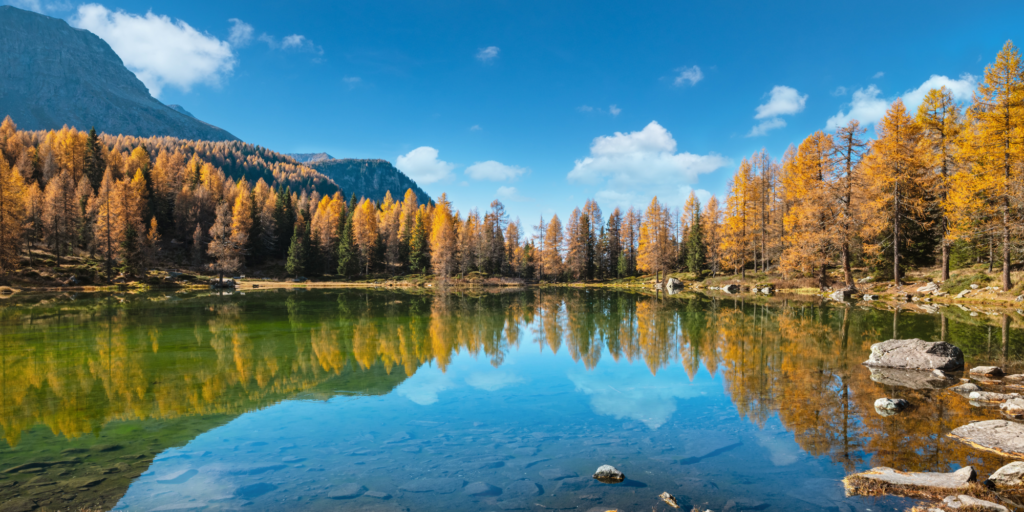
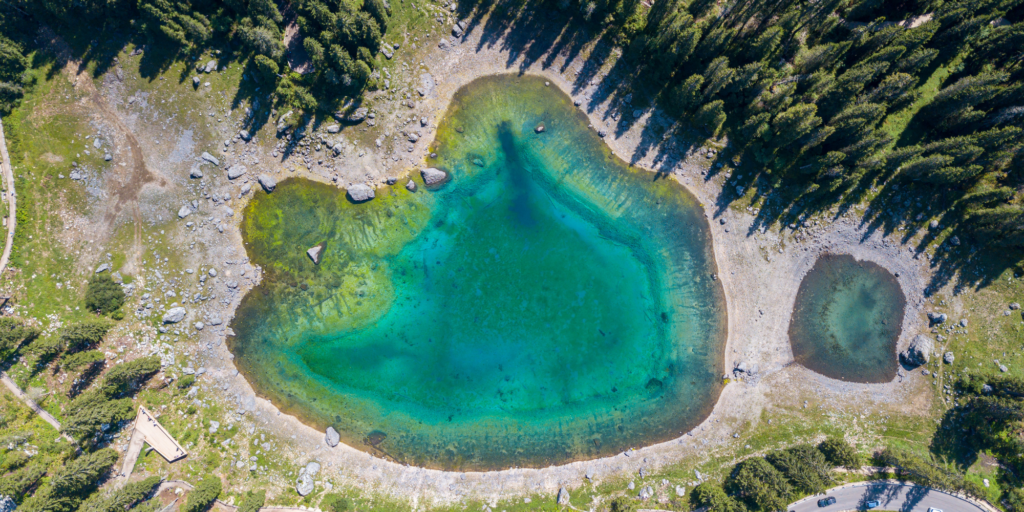
Lying at 1,534 metres in the municipality of Nova Levante (Welschnofen) in South Tyrol, at the foot of the Latemar massif, it’s one of those places that really strikes you – not for its size, which is modest, but for a combination of colours, silence and Dolomite setting you won’t find anywhere else. The water shifts from emerald green to deep blue depending on the light, season and angle – which is why it is called the Rainbow Lake, or in Ladin Lech de Ergobando.
Before the legend, there’s geology. The lake is fed exclusively by underground springs – it has no visible inflows – and its bed is made of pale dolomite rock. Particular algae that react to sunlight, combined with the reflection of the spruce forest and the walls of the Latemar, create a unique colour effect that changes constantly throughout the day.
In spring, between May and June, the lake reaches its maximum size and depth – up to 22 metres – offering its most majestic show. In autumn and winter the level drops considerably, but its charm remains intact, especially when the surface freezes.
Every Dolomite lake has its story. Carezza’s is one of the most beautiful.
In the depths of the lake lived Ondina, a nymph of extraordinary beauty with a sweet voice. The wizard Masaré, who lived on the Latemar, heard her singing and fell hopelessly in love. Unable to approach her, he asked the witch Langwerda for help; she suggested he disguise himself as a jewel merchant and build a rainbow from the Catinaccio to the Latemar to lure the nymph out of the water.
The plan half worked: Ondina, drawn by the rainbow, rose to the surface, but noticed the wizard hiding on the shore and dived back into the depths, never to re-emerge. Masaré, overcome with despair, took the rainbow and shattered it into a thousand pieces, throwing it into the lake along with the precious stones. And that, says the legend, is why Carezza’s waters still shine with all the colours of the rainbow today.
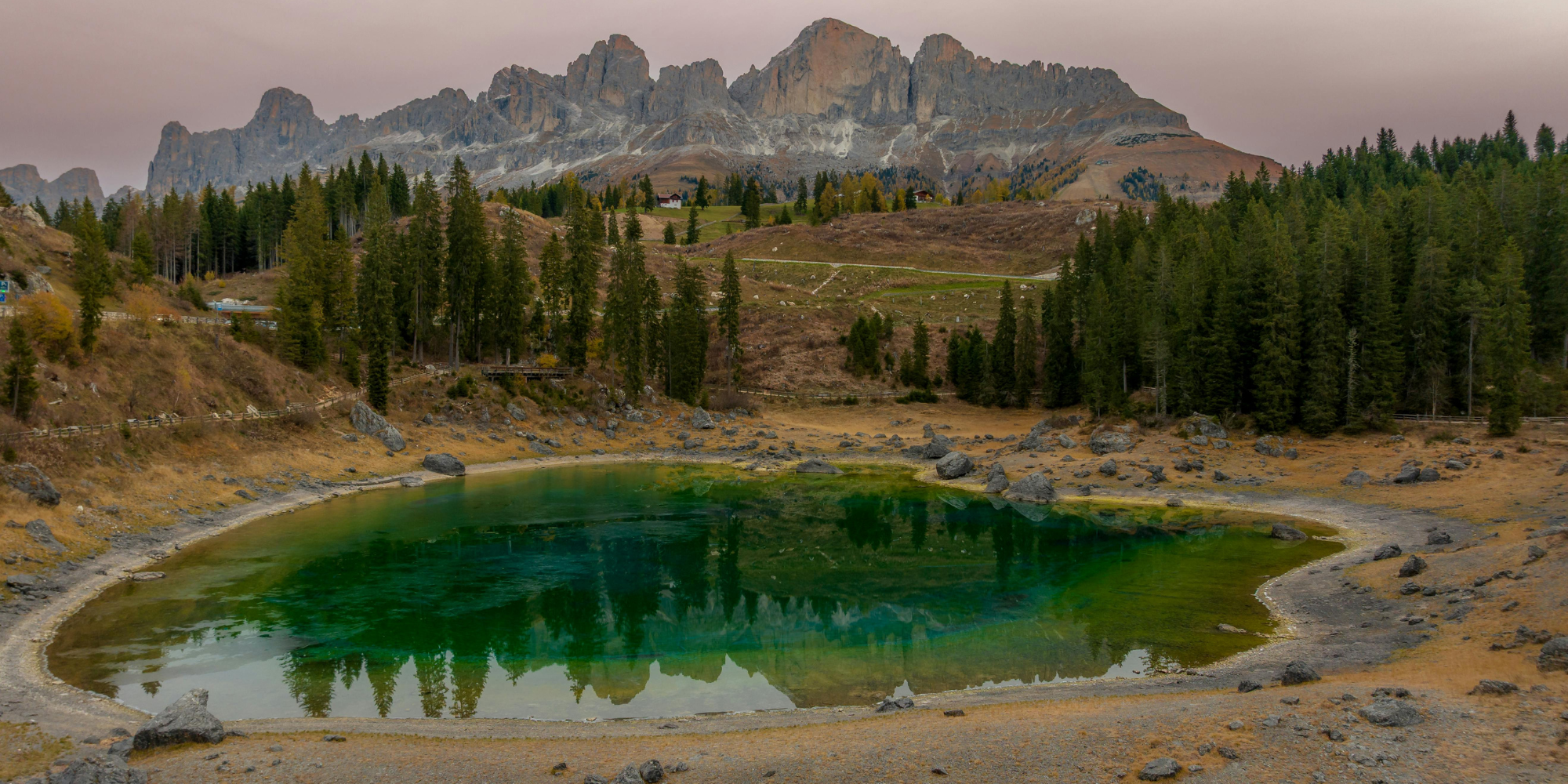
Anyone who visited Lake Carezza before 2018 and returns today will notice a difference. On the night of 29–30 October 2018, Storm Vaia hit the area with gusts of up to 120 km/h, flattening large areas of the surrounding forest and significantly changing the landscape. It is estimated that it may take decades to return to the previous state.
The lake itself remained intact: the beauty of the water and the reflection of the Latemar have not changed. But the dense spruce forest that framed it is partly different, with some areas still recovering and others already green again thanks to reforestation. It’s worth knowing before you arrive, so you are not surprised and can appreciate what nature is slowly rebuilding.
From Moena, Lake Carezza is less than 30 minutes by car. The route is simple: drive up towards Vigo di Fassa and take the SS241 to the Costalunga (Karer) Pass (1,745 m); after the pass, descend on the South Tyrolean side and the lake appears on the right after a few minutes. The Costalunga Pass marks the border between Trentino and South Tyrol – and between Val di Fassa and Val d’Ega (Eggental).
By car: the paid car park is on the opposite side of the road from the lake, reached through a tunnel under the main road. It costs about €1 per hour. Alternatively, there are free parking areas along the SS241, a few minutes’ walk from the lake. In high season – July and August – it’s best to arrive before 9 am or after 5 pm: at midday the main car park fills up quickly.
By public transport: from Moena, take bus 101 to Vigo di Fassa, then change to the line up to the Costalunga Pass and the lake. It’s a good option especially if you want to avoid parking problems on summer weekends.
The path around the lake is flat, takes about 20–30 minutes and has viewpoints marked by wooden fences. Climbing over them to reach the shore is forbidden – a rule that protects the ecosystem of the algae responsible for the colours. Paradoxically, this is also good for photography: the paths are free of people wading in or sitting on the shore.
If you want to go beyond the circular walk, there are a few options:
Lago di Mezzo (Mittersee): a short path branching off the Carezza route leads to Lago di Mezzo, a small lake that forms every year between May and July thanks to snowmelt, reaching a maximum depth of about 2 metres. Seasonal, little known and almost always deserted.
Walking up from Nova Levante: trail 10A starts from the village of Nova Levante and climbs to the lake with about 420 metres of ascent – not particularly demanding, suitable even for non-athletes, with splendid views of the spruce forest and the Latemar along the way.
Hikes towards the Latemar: for those with the legs and the will, trails lead from the lake up into the high areas of the Latemar – one of the less frequented Dolomite groups compared to the Catinaccio, offering solitude and silence that are rare in summer.
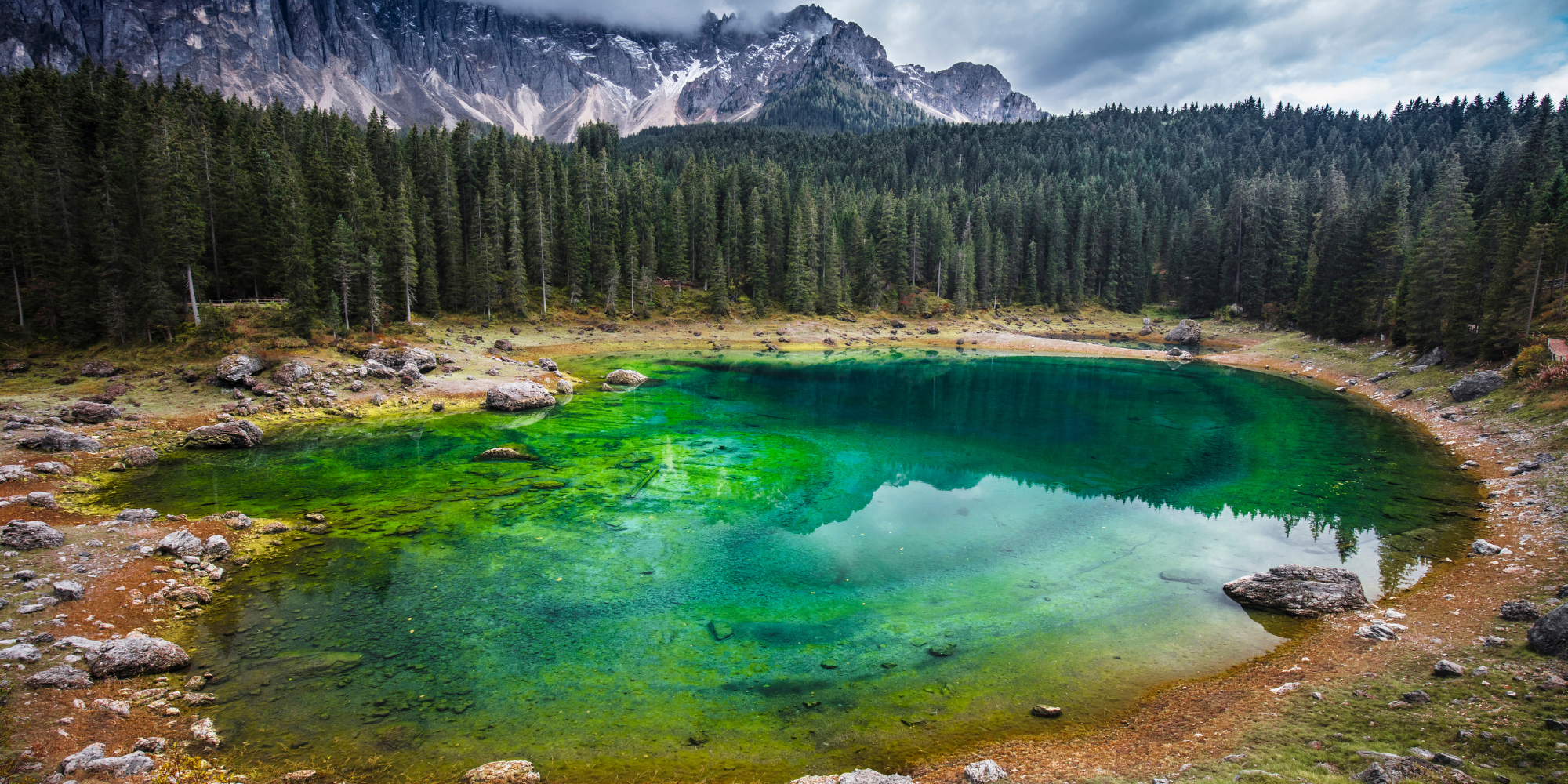
May–June is the best time for the lake itself: maximum size, most intense colours, flowering meadows all around. Crowds are still manageable, especially on weekdays.
July–August is peak season. The lake is beautiful but crowded. If you want to photograph it without people, arrive at dawn – the light is also better, with the early morning offering reflections of the Latemar that are hard to match later in the day.
September is the ideal compromise: fewer people, autumn colours beginning to light up the larches, cooler air. For those staying at the Cavalletto during the Puzzone Festival, a morning at Carezza fits perfectly into the week.
Winter: the frozen lake is a completely different experience – quieter, almost unreal. The snowy forest, the white Latemar, the silence. Not everyone knows it, but it’s worth the trip in this season too.
Those who go to Carezza from Moena pass over the Costalunga Pass and rarely stop. That’s a mistake. The pass is one of the most scenic in the Dolomites, with direct views of the Catinaccio on one side and the Latemar on the other. In summer there are rest areas with benches and picnic spots, and the hut at the pass serves simple food on a panoramic terrace. It’s worth a thirty-minute stop, on the way there or back.
The Costalunga Pass + Lake Carezza combination takes half a day, and for those with the legs and the will it pairs perfectly with a hike to the Roda de Vael hut, about 2 hours’ walk from the pass, or using the lifts to reduce the climb.
Hotel Cavalletto is less than half an hour from Lake Carezza. At reception we can advise you on the best time to visit depending on the season and the day’s weather – one of those little details that make the difference between an ordinary visit and a memorable one.
Planning a day at Lake Carezza during your stay in Moena? Contact Hotel Cavalletto – we’ll help you organise every outing in the best possible way.