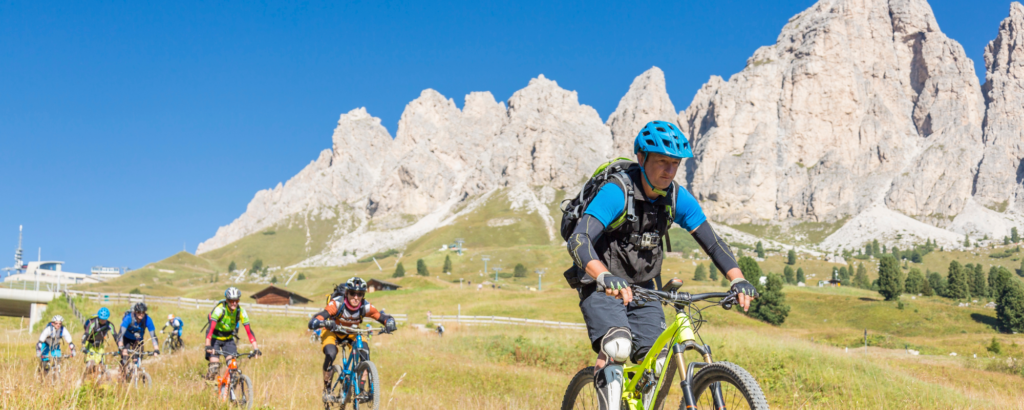
Here’s a little-known fact that bikers who love MTB history know well: mountain biking in Italy was born here. Or almost.
In 1989, thanks to Riccardo Taroni’s intuition, the Rampilonga della Val di Fassa was born, one of the milestones in the history of mountain biking in Italy. The start and finish were in Moena, at the sports ground that also hosts the Marcialonga cross-country ski race. In its 30-year history, more than 70,000 bikers left their heart and legs on the Lusia climb – that 9-kilometre ascent up to 2,272 metres, which has stayed exactly the same while everything else changed.
The answer lies in the shape of the valley: a narrow valley floor rising from Moena to Canazei, with slopes climbing steeply on both sides, dense forests, high pastures and Dolomite passes. A geography that naturally creates big elevation gains, varied terrain and a density of trails few other Alpine areas can match.
The five areas of Dolomiti Lagorai Bike have about 100 km of mountain bike trails linking Val di Fassa with the cycle paths of Val di Fiemme and Valsugana, all the way to Lake Caldonazzo and Bassano del Grappa. It’s not just a local system: it’s a network.
From Moena, the Ronchi–Alpe Lusia gondola is the ideal access point: you take your bike up on the lift, gain 700 metres without pedalling, and from there a range of descents and traverses opens up to fill the whole day.
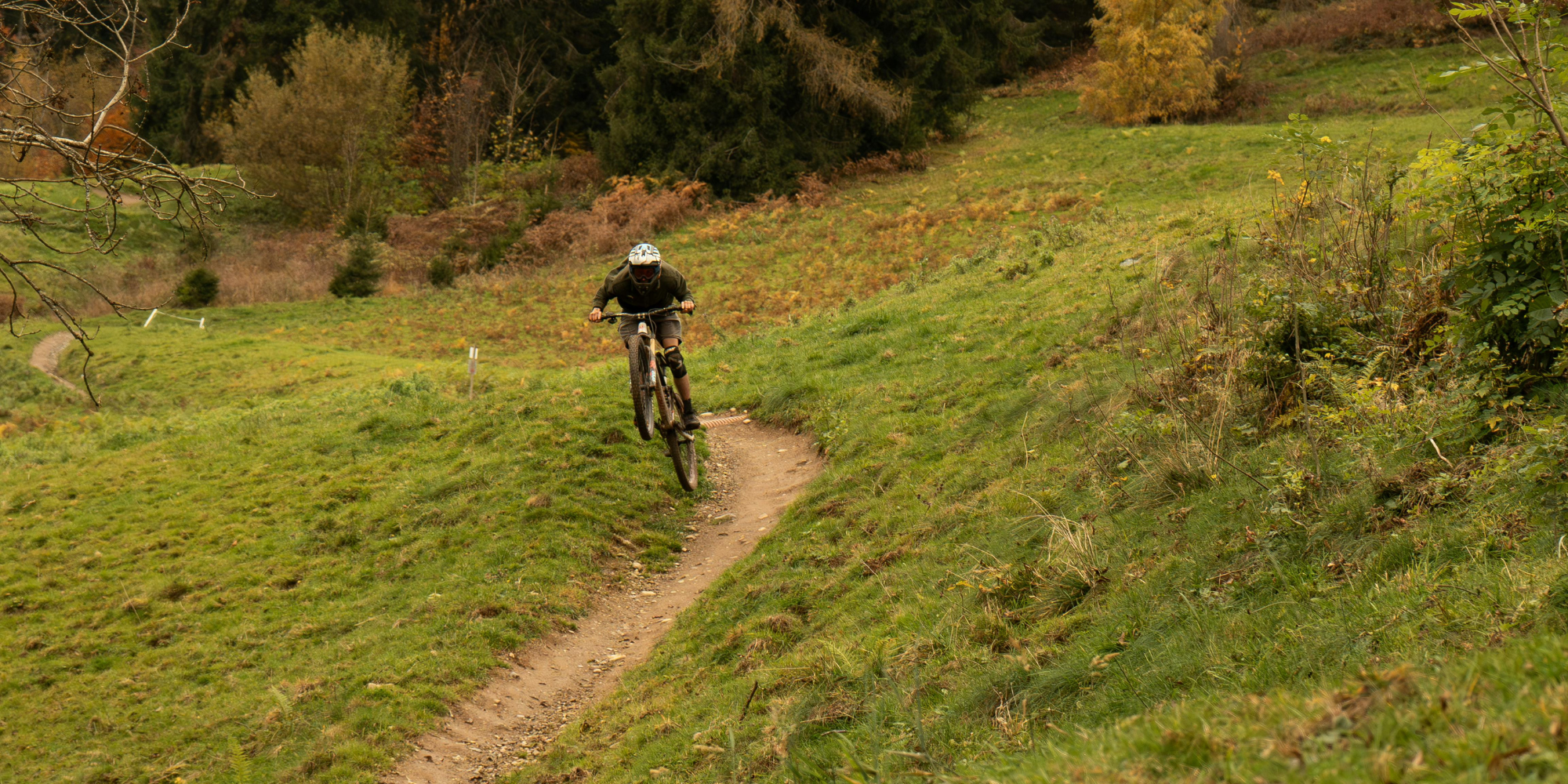
Easy — Moena mountain huts (loop, ~15 km, 400 m ascent) From Moena’s main square, climb towards Someda on a scenic lane overlooking the valley, cross the bridge over the Avisio and ride the dirt tracks across the Larcionè meadows. The route passes quiet hamlets and little-used paths, meadows and woods that offer peace even in one of the most popular destinations in the Dolomites. Technically accessible, with mostly compact surfaces. Ideal for riding without great technical demands.
Intermediate — Moena–Alpe Lusia–Soraga–Moena (loop, ~25 km, 700 m ascent) The route starts in Moena and reaches the panoramic balcony of Alpe Lusia before descending to the valley floor via Soraga and Pozza di Fassa, returning along the Avisio cycle path. You can use the gondola for the climb, making the actual ascent much more manageable. The view from the Lusia ridge – Catinaccio, Sassolungo, Pale di San Martino, Marmolada – is the one bikers photograph most.
Intermediate/advanced — San Pellegrino Bike Trail (21.5 km, 900 m ascent) The loop goes from the San Pellegrino Pass to Falcade on a route shared with hikers. The climb is demanding but steady, and the view from Col Margherita repays every metre gained. Varied surfaces, some technical downhill sections. It pairs well with lunch at the Fuciade hut halfway round.
Expert — Val di Fassa Classic (45 km, ~2,000 m ascent) This is the original Rampilonga route: it starts in Moena, reaches the panoramic balcony of Alpe Lusia, descends to the valley floor through Soraga, Pozza and Vigo di Fassa, and returns to Moena with the tough finale of the Malga Roncac loop. Average time: 6 hours 20 minutes. It’s not an outing, it’s a full day.
Expert — Val di Fassa Marathon (64 km, 2,760 m ascent) The long version. It follows the Classic route as far as Soraga, then extends towards the Costalunga (Karer) Pass and returns to Moena through the hamlets of Peniola and Medil. Estimated time: 7 hours 30 minutes. Only for trained legs and minds.
The arrival of e-MTBs has changed the profile of riders, and it shows in Val di Fassa. Routes that were once reserved for those with years of training in their legs are now accessible to anyone who wants to enjoy the scenery without sacrificing the following days to fatigue.
Charging points are located along the main routes and at mountain huts. The Alpe Lusia gondola also carries e-MTBs. Rental shops in Moena offer up-to-date models with different battery configurations, and it’s best to choose according to the type of route, not just price.
A practical note: e-MTBs are heavier than traditional mountain bikes, which makes technical descents harder to control. Riders without experience on technical terrain should choose routes with more even surfaces, at least at first.
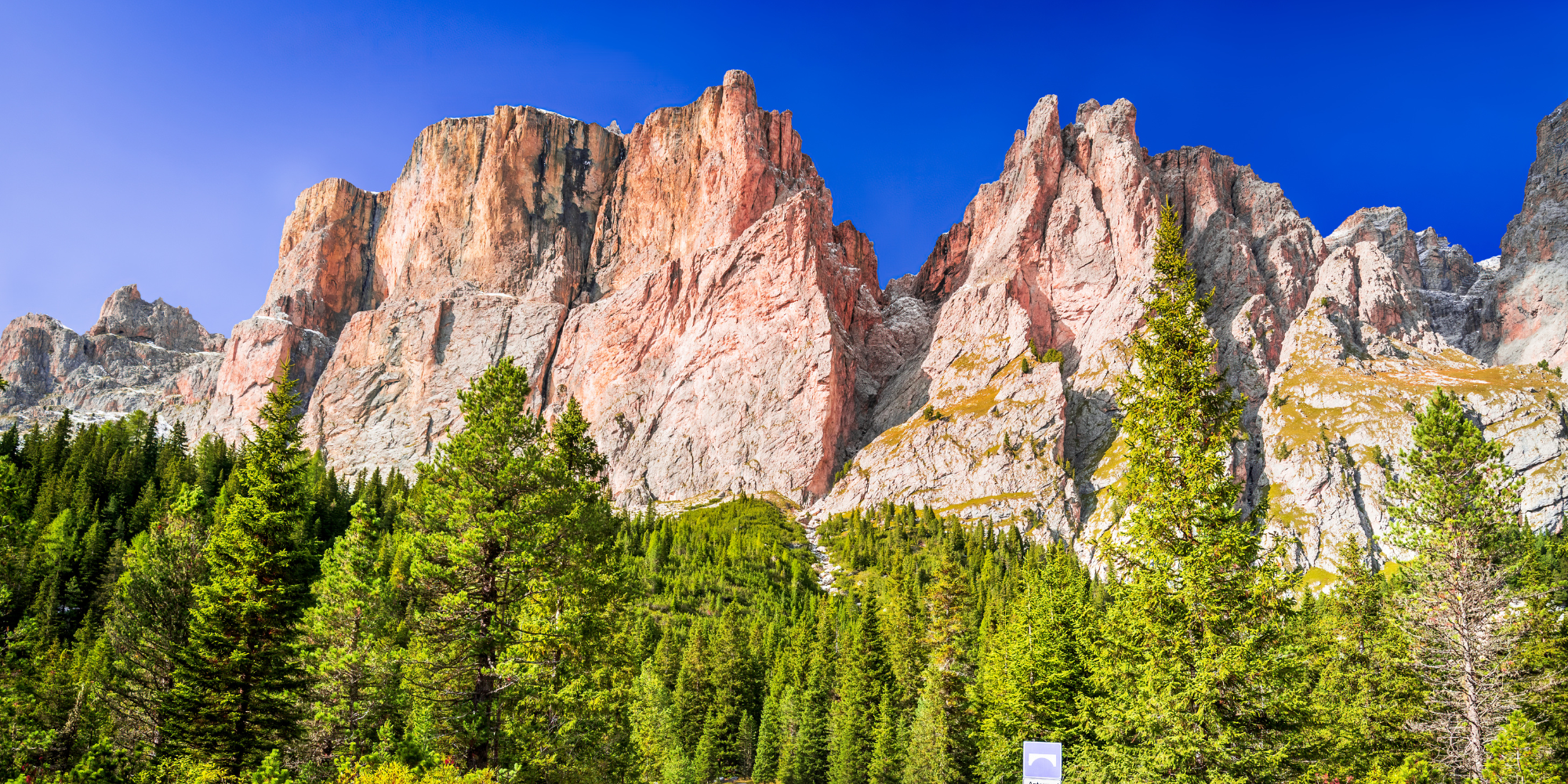
The Sellaronda Bike Day is the event that every year draws thousands of bikers from all over Europe – not to race, but to live a unique experience.
The Sellaronda Bike Day takes place twice a year – in June and September; this year on 6 June and 12 September 2026 – and it is the only time the roads over the four Sellaronda passes are closed to motor traffic and reserved exclusively for bicycles. No cars, no motorbikes. Just bikes, views and the silence of the high Dolomites.
The loop crosses the Gardena, Campolongo, Pordoi and Sella passes – the same as the winter ski Sellaronda – for a total of about 55 km and 1,800 metres of climbing. It is e-MTB friendly, and in recent years e-bikes have become the majority of participants.
From Moena, the most natural access is via Canazei, the eastern entry point to the circuit. The June date usually falls in the first half of the month and the September date at the beginning of the month, but the official calendar should be checked each year on dolomitisuperski.com, as dates vary slightly.
Booking the Cavalletto for the Sellaronda Bike Day weekend – in June or September – means being twenty minutes from the start, with everything else taken care of.
In Moena there are several MTB and e-MTB rental shops offering technical servicing and set-up. The Moena Outdoor programme includes guided MTB and e-bike tours and bike and equipment rental, available to Cavalletto guests as part of the free weekly programme – a good option for exploring lesser-known trails with someone who knows them well.
For those who prefer to ride independently: the Outdooractive and Komoot apps have all the main Val di Fassa routes available offline, with elevation profiles and surface information. The Bike Express Fassa Fiemme – the bus service that carries bikes – lets you ride one-way routes without having to return to your starting point.
| Profile | Recommended route |
| First time in Val di Fassa, beginner level | Moena mountain huts |
| Views, even surfaces, half a day | Moena–Alpe Lusia–Soraga (with gondola) |
| Full day, good fitness | San Pellegrino Bike Trail |
| Expert biker looking for the historic challenge | Val di Fassa Classic |
| Maximum adventure, all day | Val di Fassa Marathon |
| E-bike, first experience | Moena–Alpe Lusia by gondola, descent to Soraga |
Hotel Cavalletto is in the centre of Moena, a five-minute walk from the gondola and the main rental shops. Secure bike storage, a bike wash area and a wellness centre that – after a day of climbing – becomes the most eagerly awaited part of the day.
Planning an MTB holiday in Val di Fassa? Discover availability and services at Hotel Cavalletto – in the heart of Moena, the historic birthplace of Italian mountain biking.